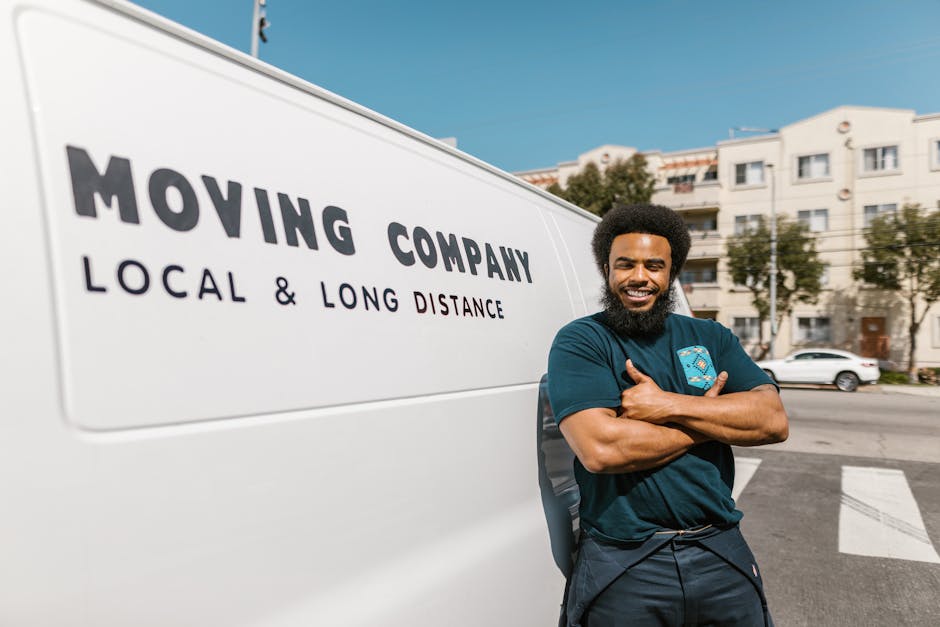
Harringay parking restrictions affecting moving vans: what to know before moving day
If you are planning a move in north London, Harringay parking restrictions affecting moving vans can be the difference between a smooth unload and a very long, slightly stressful morning. The roads may look straightforward on a map, but once a large vehicle turns up, kerb space, permit rules, yellow lines, bay markings, and time limits suddenly matter a lot more. That is especially true in busy residential streets where a van can't just "find somewhere nearby" and hope for the best.
This guide explains what usually gets in the way, how moving vans are typically handled in practice, and what you can do to reduce the risk of fines, delays, or awkward carry distances. It also gives you a realistic planning checklist, not a theoretical one. Because let's face it, nobody wants to be carrying boxes past a double-parked van while the clock is ticking.
Table of Contents
- Why Harringay parking restrictions affecting moving vans Matters
- How Harringay parking restrictions affecting moving vans Works
- Key Benefits and Practical Advantages
- Who This Is For and When It Makes Sense
- Step-by-Step Guidance
- Expert Tips for Better Results
- Common Mistakes to Avoid
- Tools, Resources and Recommendations
- Law, Compliance, Standards, or Best Practice
- Options, Methods, or Comparison Table
- Case Study or Real-World Example
- Practical Checklist
- Conclusion
- Frequently Asked Questions
Why Harringay parking restrictions affecting moving vans Matters
Parking restrictions are not just a background nuisance; they shape the whole move. In Harringay, a moving van may need to stop close to the entrance, often for loading or unloading only. If the nearest legal space is taken, or if the street is controlled by permit bays, yellow line restrictions, or short-stay limits, the crew may have to park further away and carry everything longer than planned.
That matters for three simple reasons. First, it affects timing. A move that should take one trip can stretch into several. Second, it affects safety. Longer carries mean more risk when lifting heavy furniture or navigating narrow pavements. Third, it affects cost. Delays may add labour time, and in some cases a van driver may need to reposition repeatedly to stay compliant.
There is also the plain human side of it. Moving day is already full of decisions: which boxes go first, whether the sofa will fit round the stairwell, where the kettle is, and who packed the charger. Parking should not become the hidden problem that throws everything off. A little local planning goes a long way.
For many households, the smartest move is to choose a service that already understands local access issues. If you are comparing options, pages like man and van support in Harringay, removal services, and house removals can help you think through the size of vehicle and the likely access needs before moving day arrives.
Expert summary: In Harringay, parking restrictions are not just a legal detail; they are a planning factor. The best moves are the ones where the van, the street, and the unloading window all line up cleanly.
How Harringay parking restrictions affecting moving vans Works
There is no single rule that applies to every street in Harringay, and that is exactly why people get caught out. Some roads allow limited stopping in marked bays. Others have resident permit controls, time-limited parking, or no-stopping zones at certain times of day. A moving van must follow the same on-street rules as any other vehicle unless a specific loading exemption or local arrangement applies.
In practical terms, the process usually works like this:
- The driver checks the street conditions before arrival, including bay signs and any obvious restrictions.
- If loading is permitted, the van stops only for the time needed to move items safely.
- If parking is not available near the property, the team may park further away and walk items in.
- If access is too tight, the move may need to be timed differently or split into smaller loads.
That sounds simple. In reality, it rarely feels simple on the day. A bay may look free but be reserved by restriction. A dropped kerb may be tempting but not safe or lawful to block. A road that seems quiet at 8 a.m. might be much busier by mid-morning. Small details matter more than people expect.
Moving vans also vary. A compact vehicle may fit more easily into constrained streets, while a larger vehicle or moving truck may be better for big household moves but harder to position legally near the door. That is why local knowledge, not just vehicle size, is such a big deal.
For many customers, an early conversation about access is enough to prevent a lot of trouble. If stairs, tight corners, or a limited parking window are likely, a more flexible option such as a removal van or a tailored man with van arrangement may be more practical than a bigger lorry. Not always, but often enough.
Key Benefits and Practical Advantages
Thinking ahead about parking restrictions is not just about avoiding penalties. It gives you a calmer move from the start.
- Less risk of delay: The crew can plan the arrival time and parking approach around the street layout.
- Shorter carrying distance: Better parking means less time spent walking heavy items back and forth.
- Lower stress: The whole day feels more manageable when access is sorted early.
- Better cost control: Fewer delays usually mean fewer billable interruptions, if time-based charges apply.
- Safer handling: Close parking reduces strain and the chance of damaging furniture, walls, or door frames.
There is another quiet benefit: better communication with neighbours and building managers. When a van is expected, properly positioned, and unloading quickly, everyone tends to be much less grumpy. Amazing how that works.
If your move involves a full household, home moves and flat removals are the kind of services where parking planning pays off immediately. For business relocations, the same logic applies to office removals and commercial moves, where loading bays, staff access, and delivery windows can become a bit of a puzzle.
Who This Is For and When It Makes Sense
This topic matters to anyone moving in or out of Harringay, but some people feel the impact more sharply than others.
- Residents on permit-controlled streets: If your road has resident bays or controlled parking, the van may need a carefully chosen stop.
- People moving from flats: Flats often mean stairs, shared entrances, and limited kerb space. That combination is rarely generous.
- Families with larger furniture: Sofas, wardrobes, beds, and appliances are much harder to shuttle from a distant parking spot.
- Students: Student moves are often quick, but quick doesn't mean easy. The van still needs a legal place to stop. See also student removals.
- Small businesses and offices: Time windows are tighter, and one parking mistake can ripple through the whole schedule.
- People needing same-day help: If plans changed late, a fast move still needs local access planning. Same-day removals can only work properly when parking is not a complete mystery.
Truth be told, this is also for anyone who has ever said, "It'll be fine, the van can just stop outside." Sometimes it can. Sometimes it absolutely cannot. The difference is usually the street signs.
Step-by-Step Guidance
If you want to avoid last-minute chaos, use a simple planning sequence. It does not need to be complicated.
- Check the property access first. Look at the street, the road width, and whether there is room for a van to pause safely near the entrance.
- Read the parking signs carefully. Look for times, permit requirements, loading restrictions, bay limits, and any suspension notices.
- Match the vehicle to the street. A smaller van may be easier where access is tight. A larger vehicle may be better if the load is heavy and parking is straightforward.
- Tell the mover about the exact situation. Mention flats, stairs, lift access, narrow roads, roadworks, and anything that might delay unloading.
- Plan the timing. Early mornings are often easier, but that is not a magic rule. What matters is the restriction pattern on your specific road.
- Prepare the load for quick unloading. Group boxes, label rooms, and keep essentials separate.
- Have a backup parking idea. If the ideal spot is taken, know the next legal option nearby.
A small but useful point: if you expect a parking challenge, do not leave it until the van arrives. By then, everyone is already on the clock and mildly tense. Not ideal.
When a move is complex, it can help to look at supporting services as part of the plan. For example, packing and boxes and packing and unpacking services can reduce the number of awkward last-minute trips. And if you need to hold items before moving in, storage can remove some pressure from an already tight access window.
Expert Tips for Better Results
Here is where experience saves you time. Small choices add up quickly.
- Walk the route from the van to the front door. It sounds basic, but it shows you where the real pinch points are: steps, railings, parked cars, and tight corners.
- Use room-by-room labels. If the crew can place boxes directly where they belong, unloading is faster and less frantic.
- Keep a "first hour" box separate. Kettle, tea, mugs, phone charger, medicine, toilet roll. You will thank yourself later.
- Choose a realistic vehicle size. Bigger is not always better if the street can't accommodate it.
- Build in a little cushion. A 10-minute delay on paper can become 30 minutes in real life. That happens. Often enough.
- Ask about insurance and handling standards. If something heavy needs moving, you want to know it is being managed properly. The page on insurance and safety is worth a look when you are comparing providers.
One more thing. If you live on a road where parking is genuinely awkward, it may be worth taking a lighter, more responsive moving setup instead of forcing a larger vehicle into a poor fit. A move should suit the street, not fight it.
Common Mistakes to Avoid
Most parking-related moving problems come from a handful of predictable mistakes. They are easy to avoid once you know them.
- Assuming the street is fine because it was quiet yesterday. Parking conditions change by time of day, day of week, and even by school run traffic.
- Ignoring loading limits. A space that looks usable may still be restricted.
- Not telling the mover about permit rules. This is one of the fastest ways to create a delay.
- Choosing the wrong vehicle. A van that is too big for the street can create a lot of extra shuffling.
- Packing too slowly. If the van has a limited stopping window, last-minute sorting is a headache.
- Forgetting to protect hallways and doorways. The walk from van to property is where a lot of accidental knocks happen.
A slightly awkward truth: the biggest mistake is often optimism. "We'll sort it on the day." That phrase has caused more moving stress than bad weather, probably.
Tools, Resources and Recommendations
You do not need a toolkit full of gadgets, but a few practical items make all the difference.
| Item or resource | Why it helps | Best use |
|---|---|---|
| Printed parking sign notes | Helps you remember key time windows and permit details | Before the van arrives |
| Floor plan or room list | Makes unloading faster and less chaotic | When assigning boxes and furniture |
| Labels and coloured tape | Reduces confusion at the kerb and inside the property | During packing |
| Measuring tape | Useful for checking whether furniture, doors, or lifts are likely to be a problem | Pre-move planning |
| Storage option | Gives you flexibility if the access window is tight or the new place is not ready yet | Delayed move-ins |
For service planning, it can also help to review pages like pricing and quotes before you lock anything in. If you need a more general overview of what the company offers, removals and removal services are sensible starting points. And if you are moving a piano or other awkward item, use specialist support such as piano removals rather than guessing your way through a narrow street.
Law, Compliance, Standards, or Best Practice
Parking rules are local and can change from street to street, so the safest approach is to treat signs and markings as the primary source of truth on the day. In the UK, drivers are expected to follow on-street restrictions carefully, and moving vans are not exempt just because they are unloading household goods. In practice, a loading or unloading stop may be possible in some areas, but only where the local conditions and signage allow it.
That is why it is good practice to:
- check the exact street restrictions before moving day
- avoid blocking access, crossings, driveways, or emergency routes
- keep unloading periods as short as reasonably possible
- use a vehicle size that fits the access conditions
- make sure the crew understands where stopping is and is not allowed
For customers, this is mostly about planning. For drivers, it is about staying alert and reading the street rather than making assumptions. There is no glamour in it, just discipline. A boring kind of discipline, but a useful one.
If you want reassurance around how items are handled, health and safety policy and terms and conditions can give you a clearer sense of the standards and expectations around the service relationship. For recycling or clearing unwanted items, recycling and sustainability is also relevant, especially when a move includes decluttering.
Options, Methods, or Comparison Table
There are usually three ways to approach a move in a restricted parking area. Each has a place. The trick is picking the one that actually suits your street.
| Approach | Best for | Pros | Trade-offs |
|---|---|---|---|
| Small van close to the property | Tight residential streets, flats, quick moves | Easier parking, shorter carry distances, more flexibility | May require more trips if the load is large |
| Larger van or truck with careful timing | Big household moves, offices, bulky furniture | Moves more in one go, efficient for volume | Harder to park and manoeuvre in narrow roads |
| Split move with storage or staging | Complicated access, delayed handover, renovation gaps | Reduces time pressure, helps with awkward logistics | Needs more planning and may involve an extra step |
For some people, especially those moving out of a flat or shared building, the first option is the least stressful. For others, a bigger vehicle is still the right choice because the main challenge is load volume, not parking. If you are moving business equipment, the balance may tilt toward office relocation services or office removals, which are usually better suited to structured handovers and tighter time windows.
Case Study or Real-World Example
A typical Harringay move might look like this. A couple are leaving a first-floor flat on a street with limited parking. The van can legally stop for a short loading period in one bay, but not directly outside the building. The driver arrives early, parks in the nearest allowed spot, and the team starts moving boxes first because they are quickest and easiest to carry. Larger items follow once the path is clear.
At first, it feels like a minor inconvenience. The carrying distance is longer than they hoped, and the hallway is narrow. But because the boxes were labelled and the van was chosen to match the street, the whole process stays manageable. No one is circling the block in panic. No one is trying to wedge a wardrobe into a parking bay. That is a win.
Now compare that to a less planned version. Same street, same property, but the vehicle is too large, the parking restrictions were not checked, and the crew is guessing where they can stop. Suddenly the move slows down, the furniture handling gets clumsy, and the whole day takes on that slightly frantic feeling you can almost smell in the air. Nobody wants that.
Special cases can be even trickier. If you are moving with fragile or oversized items, or you need support from furniture removals or furniture pick up, parking becomes part of the handling plan, not just a side issue. For heavier loads, working with a removal truck hire option may make sense, but only if the street can support it.
Practical Checklist
Use this checklist the day before the move. Simple, but effective.
- Confirm the exact moving address and street layout.
- Read all parking signs near the property entrance.
- Check whether the vehicle size fits the road.
- Decide where the van will stop if the first spot is unavailable.
- Tell the mover about any permit, bay, or loading restrictions.
- Pack and label boxes so unloading is quick.
- Keep essential items separate.
- Protect furniture and doorways for longer carries.
- Allow extra time for narrow streets or flats.
- Have a backup plan if parking becomes impossible.
If you are moving out of a property and into temporary accommodation, or if your completion date has changed late in the process, a storage buffer can be the difference between a tidy day and a messy one. Not fancy, just practical.
Conclusion
Harringay parking restrictions affecting moving vans are one of those local realities that can either be a small detail or the main event, depending on how well you prepare. If you understand the street, choose the right vehicle, and give the moving team enough information, the whole job becomes much more predictable. And predictability is gold on moving day.
That is the real takeaway: parking is not separate from the move. It is part of the move. Handle it early, and you save time, energy, and a lot of unnecessary back-and-forth. Handle it late, and everything gets harder than it needs to be. Simple as that.
If you are planning a move in the area and want a more confident, locally aware approach, take a look at the available service options and make your plan fit the street, not the other way around. A calm move starts with a calm parking plan, and that is a lovely thing to have in place.
Get a free quote today and see how much you can save.
Frequently Asked Questions
Can a moving van park outside my Harringay property?
Sometimes, yes, but only if the street restrictions allow it. Always check signs, bay markings, and any loading limits before assuming the van can stop directly outside.
Do moving vans get special parking permission in Harringay?
Not automatically. A moving van still has to follow the local parking rules on the street. In some situations loading or unloading may be allowed, but it depends on the exact location and signage.
What if my street only has permit parking?
If the street is permit-controlled, the van may need to use a legal loading area or a nearby unrestricted space. It is worth planning this in advance rather than hoping for a last-minute gap.
Is a smaller van better for restricted parking areas?
Often it is. A smaller van can be easier to position in tight streets and may reduce the distance you need to carry items. But if you have a lot to move, you still need to balance access with capacity.
Should I book a morning or afternoon move?
There is no one-size-fits-all answer. Early starts can be helpful in some areas, but the best time depends on local parking patterns, traffic, and the restriction times on your road.
What happens if the van cannot park near the house?
The crew may have to park further away and carry items from the legal stopping point. That usually takes longer, which is why it is so useful to plan access carefully.
How do I prepare if I live in a flat with limited access?
Measure stairwells if needed, keep boxes well labelled, and let the mover know about lifts, shared entrances, and parking limitations. Flat moves benefit a lot from early planning.
Can parking issues increase the cost of a move?
They can, indirectly. If access is slower or the move takes longer than expected, that may affect the time required. The exact effect depends on the service and the circumstances.
What should I tell my mover before moving day?
Tell them about parking restrictions, road width, permits, loading zones, stairs, and any bulky items. The more accurate the access information, the better they can plan.
Do office moves have the same parking problems?
Yes, and sometimes more so. Offices often have tighter handover windows, more equipment, and less tolerance for delays, so parking and unloading planning become even more important.
Is storage useful if parking is difficult?
It can be very useful. If the move-in and move-out timings do not line up neatly, or if access is awkward, storage gives you breathing space and reduces pressure on the day.
How early should I plan parking for a Harringay move?
Ideally, as soon as the move date is fixed. Even a quick street check a few days before can save a lot of stress. On the day itself, things can move fast, and not always in a good way.