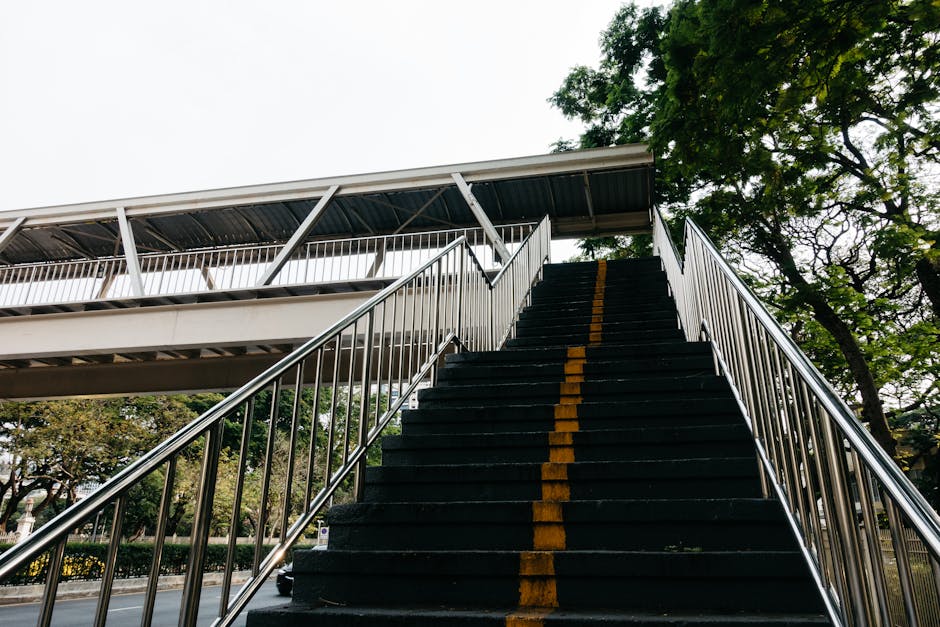
Tight staircases and access problems for Harringay removals
Posted on 25/06/2026

Tight staircases and access problems for Harringay removals: a practical local guide
If you are moving in Harringay, there is a good chance the hardest part is not the packing. It is the staircase. Narrow turns, awkward landings, low ceilings, shared hallways, railings that are just in the wrong place, and the classic "that sofa looked smaller in the shop" moment can all turn a simple move into a slow, stressful one. Tight staircases and access problems for Harringay removals are a real issue, especially in flats, older terraces, split-level homes, and properties with limited kerb space.
This guide breaks the problem down in plain English. You will learn why access matters, how movers work around it, what to check before moving day, and which mistakes tend to cause delays. It also covers the practical side of choosing the right removal approach, including when a smaller vehicle or a more flexible service is the sensible option. If you want a smoother move, especially in a place where every stair seems to have an opinion, this is for you.
Why tight staircases and access problems for Harringay removals matters
Access is one of those moving details people underestimate until they are standing in a hallway, sweating slightly, trying to rotate a wardrobe that clearly has no intention of cooperating. In Harringay, this happens more often than you might think. Some homes have steep internal stairs, many flats have narrow communal landings, and roadside parking can be tight enough to make the loading process feel like a puzzle with missing pieces.
Why does this matter so much? Because access affects almost every part of a removal: the time needed, the number of people required, the type of vehicle used, how items are protected, and whether anything needs dismantling before it leaves the property. A move that looks straightforward on paper can become complex once furniture has to twist around a corner with barely an inch to spare.
It also matters for safety. Heavy lifting on narrow stairs increases the chance of scrapes, strained backs, damaged walls, knocked skirting boards, and frustrated neighbours. And to be fair, nobody wants to become that person apologising in the communal entrance while a mattress blocks half the building.
If you are planning flat removals in Harringay or a larger house move, access should be treated as a core part of the job, not an afterthought. In practice, it can determine whether the day feels organised or chaotic.
How tight staircases and access problems for Harringay removals works
Good removal planning starts with a simple question: what can safely fit through the building, and what cannot? That sounds obvious, but the answer is often less obvious once you factor in angles, bannisters, door frames, lamp fittings, wall corners, and the person in front of you saying "it should go if we just lift it a bit." Sometimes it does. Sometimes it really, really does not.
A professional mover will usually assess three things before the move:
- The staircase itself - width, turning space, head height, landings, handrails, and whether items can be carried upright or must be angled.
- The route in and out - front door size, hallway bottlenecks, communal corridors, building entry codes, lifts, and any restrictions on timing or access.
- The outside loading area - parking distance, pavement width, vehicle size, and whether the removal van can get close enough to reduce carrying distance.
From there, the job is adapted. That may mean dismantling large furniture, using smaller item-by-item carries, adding protective wraps, or spacing the loading process so the staircase is never cluttered. For more flexible support, some customers pair access-heavy jobs with a man with a van service or a more tailored man and van approach, especially where the property is compact or the move is light but awkward.
If there is a bigger volume of furniture, a dedicated removal van and a properly planned carry route are often the safer option. The point is not just to move faster. It is to move in a way that avoids damage and keeps the day calm enough to function.
One small but important detail: access issues are not only about furniture size. They are about flow. A staircase that is technically wide enough can still be a problem if there is no room to pause, turn, or let two people pass safely. That is where experience really earns its keep.
Key benefits and practical advantages
Planning for access challenges is not just a defensive move. Done properly, it creates real advantages.
- Less risk of damage - walls, banisters, door frames and furniture all stay better protected when the route is understood in advance.
- Faster turnaround - the crew can work in the right order, with the right tools, rather than discovering problems halfway through the job.
- Better handling of awkward items - wardrobes, beds, sofas, desks and white goods can be treated with the right technique from the start.
- More accurate quotes - the more clearly access is described, the less likely you are to get nasty surprises later.
- Less stress for you - which, honestly, is a big one. Moving day is already noisy enough.
There is also a practical financial angle. If a mover knows the access is tight, they can plan the crew size, van choice and timing properly. That can save wasted labour time and reduce the chance of having to book an extra visit. If you want to compare service structures, it helps to review the man with van rates alongside the wider services we provide, because access complexity can shape the most cost-effective setup.
Another advantage is simply confidence. A move feels very different when everyone involved knows the staircase is the challenge and has already built a plan around it. No guessing. No panic. Just a steady, sensible process.
Who this is for and when it makes sense
This kind of planning is relevant to more people than you might expect. If you live or work in an older building, on an upper floor, or in a home with narrow internal stairs, you are already in the category. The same goes for basements, maisonettes, split-level flats, and conversions where the original layout was never designed with furniture moves in mind.
It is especially useful for:
- people moving out of compact flats with limited landing space
- families with heavy furniture and large bed frames
- students leaving shared houses or top-floor rooms
- office moves with desks, filing units or tech equipment
- anyone moving at short notice and needing a practical plan quickly
If you are moving a single item or a few pieces of furniture, the issue may be less about total volume and more about awkward shape. That is where furniture removals in Harringay can be the right fit, because the job can be organised around the item rather than the whole property.
For office relocations, access problems often show up in a different form: lifts out of service, narrow stairwells, reception bottlenecks, or long carries through shared corridors. In those cases, office removals in Harringay need a plan that respects both the building and the workday. No one wants a printer balanced awkwardly beside the fire exit at 8:45 on a Monday.
And if timing is tight, you may need a same-day option. That is not always ideal, but sometimes it is the only sensible choice when a landlord, completion chain, or building restriction has shifted the schedule. In those cases, same-day removals in Harringay can provide a quick response, provided the access information is clear from the outset.
Step-by-step guidance
Here is the most practical way to handle a move where stairs and access are going to be awkward.
- Measure the critical points. Measure stair width, landing depth, doorway height and width, and any tricky turns. If a wardrobe or sofa needs a specific angle, note that too.
- Photograph the route. Pictures of the staircase, front door, hallway, parking area, and any obstacles can be more useful than a long explanation. A photo saves a lot of back-and-forth.
- List the difficult items. Beds, mattresses, wardrobes, sofas, glass tables, mirrors, pianos and appliances need special attention. Say what can be dismantled and what cannot.
- Check parking and loading. If the van cannot park close by, allow for extra carrying distance. On a wet day, that matters more than you would think.
- Decide what should be pre-packed or stripped down. Remove drawers, shelves, loose parts and fragile contents where appropriate.
- Use the right packing materials. Good boxes, wrapping and padding reduce damage when items have to be turned, lifted or temporarily rested on a landing.
- Tell the mover about restrictions. Time windows, noisy neighbour concerns, lift bookings, building rules and access codes should be shared early.
- Keep the staircase clear. Avoid leaving bags, shoes, cleaning equipment or random boxes in the path. It sounds basic. It is basic. But it really helps.
If you are not sure how to organise the packing side, it may help to review packing and boxes in Harringay before moving day. Good packing makes access problems easier to manage because items are easier to grip, stack, and carry safely.
For moves where temporary holding space is needed, a short period in storage in Harringay can sometimes reduce pressure, especially if not every item needs to go up or down the staircase on the same day. That can be a very useful pressure valve.
Expert tips for better results
In our experience, the best access-heavy moves are usually the ones where the details are shared early and honestly. Not embellished. Not minimised. Just plain truth. "The stair turns sharply," "the sofa is heavy," "parking is about two streets away." That kind of thing.
Here are a few practical tips that make a genuine difference:
- Measure the widest item, not just the biggest one. A long but narrow piece may be easier than a shorter item with awkward handles or fixed arms.
- Check if furniture can be disassembled safely. A bed frame or table that breaks down into pieces is much easier to move on a tight stairwell.
- Protect the building first. Corner guards, blankets and wraps are worth using. A tiny chip on a painted wall can become an annoying repair later.
- Move large items before boxes. It reduces clutter on landings and keeps the stair route workable.
- Think in terms of sequence, not just load. The order in which items leave the property can matter more than the number of items.
One simple truth: if the access is difficult, rushing usually makes it worse. Slow is smooth, smooth is fast. A bit of a cliche, yes, but it holds up on a third-floor landing at 9 a.m.
If you want to understand how moving help is structured in the area, the broader removal services in Harringay page is useful context, and the overview of removals in Harringay can help you match the job to the right type of support.

Common mistakes to avoid
Most access problems are manageable. The trouble usually comes from avoidable mistakes.
- Assuming "it will fit somehow." That is a dangerous sentence in removals. The staircase has no interest in optimism.
- Forgetting about the return journey. Carrying something down can be harder than getting it up, especially on a twisty stairwell.
- Not checking communal access. Shared halls, intercoms, lift booking systems and neighbour-controlled entry all matter.
- Leaving too much to the day itself. If dismantling, wrapping and route planning all happen on the spot, delays are almost guaranteed.
- Booking the wrong vehicle size. Too large can cause parking headaches; too small can mean extra trips. It is a balance.
- Ignoring fragile items. Mirrors, artwork and screens need special handling even if the staircase itself is the main obstacle.
Another mistake is underestimating how tiring access jobs can be. A short move can still be physically demanding if every item has to be turned at an awkward angle. That is why strong planning and realistic expectations matter. You do not want the crew starting fresh and finishing frazzled.
For more guidance on choosing the right type of help, it is worth looking at man and van in Harringay as well as the more general man and a van in Harringay option. The right match can save time and reduce stress when access is difficult.
Tools, resources and recommendations
You do not need specialist equipment in the home, but a few things make access-heavy moves much easier.
- Measuring tape for stair width, door frames and furniture dimensions
- Furniture blankets and wraps to protect surfaces during turns and lifts
- Strong boxes and labels so items stay organised and easy to carry
- Basic dismantling tools for beds, shelves and tables where appropriate
- Work gloves to improve grip on bulky items
- Phone photos or a quick video to show the route and any pinch points
If you are still at the planning stage, a good starting point is to review services overview and compare it with the move type you actually need. A compact flat move is not the same as a full family relocation, and a piano is in its own category entirely. In fact, some stairs are basically saying "not today" to a piano.
For larger or more sensitive items, piano removals in Harringay deserve special attention because the combination of weight, balance, and staircase geometry is a serious one. The same careful thinking also applies to bulky furniture and tight corners.
If your move is linked to a wider relocation, it can also be useful to compare house removals in Harringay with flat removals in Harringay. The access challenges are often very different, and that difference affects timing, vehicle planning, and loading order.
Law, compliance, standards, or best practice
There is not a single special law for "tight staircases," but there are clear expectations around safe moving practice. In the UK, removal work should be carried out with sensible care for people, property and access routes. That means planning lifts properly, avoiding unnecessary manual handling risks, and being realistic about what can be moved safely without damage.
Best practice usually includes:
- reasonable manual handling techniques
- protective wrapping for furniture and building features
- clear communication about access restrictions
- safe loading and unloading routines
- respect for shared spaces and neighbours
For customers, it is sensible to check insurance, terms and safety information before booking. That does not mean you need to read every line like it is bedtime literature, but it does mean you should know what is covered, what responsibilities you have, and how access issues are handled if the layout turns out to be trickier than expected.
Useful pages to review include insurance and safety, health and safety policy, and terms and conditions. If you prefer to understand the company's wider standards, accessibility statement and privacy policy are also straightforward places to look.
For people who care about how a mover operates beyond the day itself, it can be reassuring to check the company's approach to recycling and sustainability too. Not every access problem is glamorous, but a responsible approach usually shows up in the small things.
Options, methods, or comparison table
There is no single best solution for every staircase. The right method depends on the furniture, the building, and how much carrying space you really have. Here is a simple comparison.
| Method | Best for | Strengths | Trade-offs |
|---|---|---|---|
| Full removal crew with larger vehicle | Full house or large flat moves | Efficient for bigger loads, better for many items at once | Parking and access need more planning |
| Man with a van | Smaller moves, mixed item jobs, tight access | Flexible, often easier around narrow streets and stairs | May require more packing discipline and clear item lists |
| Partial dismantling and carry plan | Bulky furniture, awkward turns | Makes tricky items easier to move safely | Needs more prep time and tools |
| Short-term storage first | Staggered moves or space-limited homes | Reduces pressure on the staircase on moving day | Extra handling and timing to organise |
If you are comparing service types, the pages on removal companies in Harringay would normally help, but only genuine, exact links should be used and this one is not available, so let's keep the focus on the options that are available. A practical route is to compare the site's pricing and quotes information with the move complexity you expect.
For many Harringay homes, the best answer is a mix of methods rather than one method alone. For instance: a smaller van, a well-planned carry route, and a few pieces dismantled in advance. Not fancy, just effective.
Case study or real-world example
A typical scenario: a top-floor flat in Harringay, no lift, narrow internal stairs, and a two-bedroom move with a bed frame, sofa, desk, dining table and several boxes of books. The customer thinks the biggest issue is the sofa. In practice, the bookshelf and mattress turn out to be the awkward pieces. Funny how that goes.
On inspection, the staircase has a tight turn midway and a small landing where two people can stand, but not much else. The move is handled in stages. First, the bed is dismantled. Then the mattress is wrapped and carried separately. The sofa is measured against the staircase and carried with two people at a specific angle, using a careful pause on the landing. Boxes are loaded after the bulky pieces, so the stair route remains clear.
The move takes longer than a straightforward ground-floor job, of course. But because the access was planned in advance, there is no scrambling, no last-minute disassembly drama, and no damaged wall corners. Everyone finishes tired, but not frazzled. That matters.
This is exactly why local context helps. If you know the area, you know that some streets and buildings can create access pressure before the first box even leaves the hallway. Articles like the Green Lanes moving guide, Turnpike Lane access tips, and the N4 removals guide all fit into that wider picture.
Sometimes, the smartest choice is to move the trickiest items first and leave the easy boxes for last. Simple. Effective. Slightly boring. Which is usually exactly what you want on moving day.
Practical checklist
Use this before the movers arrive, or when you are deciding what kind of help to book.
- Measure stair width, landings and door frames
- Photograph any tight corners or awkward turns
- List every large or fragile item
- Check whether furniture can be dismantled
- Confirm parking and loading access
- Share any building rules, codes or lift restrictions
- Pack boxes so they are not overfilled
- Set aside wraps, tape and basic tools
- Keep the hallway and staircase clear
- Ask about safety, insurance and timing
Expert summary: if your Harringay move involves a tight staircase, the best outcome comes from matching the service to the property, not the other way round. Measure first, plan clearly, and do not leave the awkward pieces to chance. That one bit of prep can save a lot of grief later.
Get a free quote today and see how much you can save.
Conclusion
Tight staircases and access problems for Harringay removals are not unusual, and they are not a sign that your move is going badly. They are just part of moving in a built-up London area with older housing, narrow entrances and the occasional staircase that seems designed by someone with a sense of humour. The good news is that access challenges are manageable when they are identified early and handled properly.
Measure carefully, communicate clearly, and choose the type of support that fits the property rather than forcing the property to fit the plan. That mindset alone solves a surprising amount.
If you want the move to feel calmer, safer and more organised, the next sensible step is simply to share the access details early and let the right plan take shape. Small effort now, much easier day later. And that is usually worth it.